






by Fred Moleck
. . . And Here Be Dragons
“. . . And here be dragons” was placed on the edges of a map by English mapmakers to indicate that it might not be a good idea not go any further in your travel plans.
In rings a little more ominous in Latin—“Hic sunt dracones!” The Latin phrase appears on the Lenox Globe, near the east coast of Africa, put together in the early 1500s. The warning was not missed.
Don’t go where you don’t know what is there.
Travel was not easy in the fifteenth and sixteenth centuries and even worse before. Most people rarely strayed further than ten miles from the place they were born. When they did, they walked.
If you were rich, you traveled by horse. If you were really rich you went by some type of cart, which had to be just about as comfortable as any steerage class in any one of today’s airlines.
When they did travel, they traveled in groups. There is, after all, safety in numbers. The medieval pilgrimage is a good example.
The pilgrimage means of travel caught on. It was fired up by “relic lust,” the uncontrollable need to go very far through dangerous territories and worship at the shrine housing a very small relic (e.g., relic of the true cross) or something very large (e.g., a large portion of a saint’s body if not the whole body itself).
You would get an indulgence if you went far.
One was never sure if he or she would return safely. One knew that there were dragons of the human species.
Throughout our history there have been numerous bandits and thieves roaming the countryside or back alleys to rob us frequently during travel.
Who could ever forget Butch Cassidy and the Sundance Kid on the railways?
We have our own nests of dragons in our travel today. Here are some signs of trouble.
An orange sign on the freeway that warns Right Lane Closed Ahead. Merge Left.
Our lives and our credit cards are not in danger, but our mental health is in peril. Usually when I see this sign I have been in the right lane for about ten miles, and to remove myself from the right lane, I must cross over three lanes . . . and it’s 5:00.
My agita rises as it tries to catch up to my soaring blood pressure.
Ripping my left hand from the steering wheel so I can put on the turn signal, I accelerate and put my life into God’s hands.
I feel a dragon of evil parentage bearing down on me.
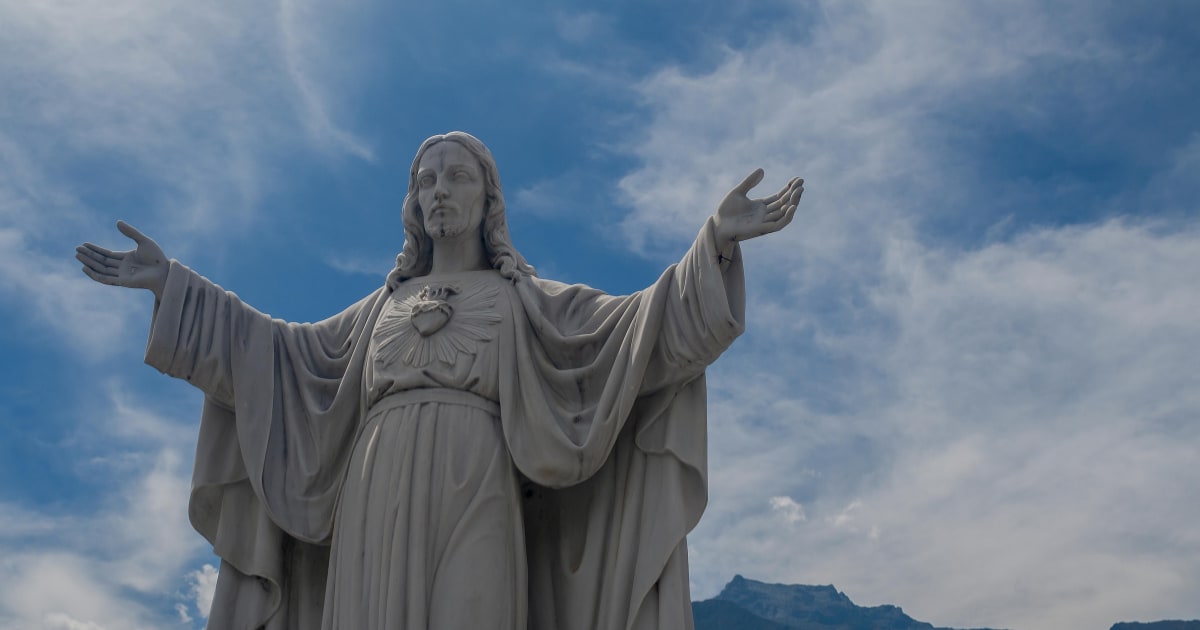
St. Michael the Archangel, defend us in battle. Be our protection against the wickedness and snares of the devil.
There must be dragons in the right lane to merit this warning. As it was, there were no dragons, just five to ten construction workers on the overpass bridge—two to three workers painting, seven to ten workers encouraging.
Another possible lair for a dragon is air travel. Not just the act of traveling through the air, but getting to the airport, enduring security check and referencing the schedule board, which tells us which flight will leave from which gate at what time—three possibilities for a dragon attack.
This dragon is more elusive because of the false hope it generates. For example, a few weeks ago I was flying out of Providence after a great weekend in New England.
From 8:30 AM and on, the departure was not changed until a half hour before boarding. But I smelled sulfur—sure indication that all is not well.
That flight was delayed four times. I rebooked for the first flight out the next morning. I barely escaped the dragon attack. St. Michael was in charge again, thank God.
I escaped.
I suggest you memorize this prayer. You never know when you might be where “Here are dragons.”May God rebuke him, we humbly pray: and do Thou, O Prince of the Heavenly Host, by the Divine Power of God, cast into hell Satan and all the evil spirits who roam throughout the world seeking the ruin of souls. Amen.
You can reach Fred Moleck via email at fmoleck@comcast.net