





-
Search:
Table Talk

by Fred Moleck

DMMD Colloquium 2008 – Part 1

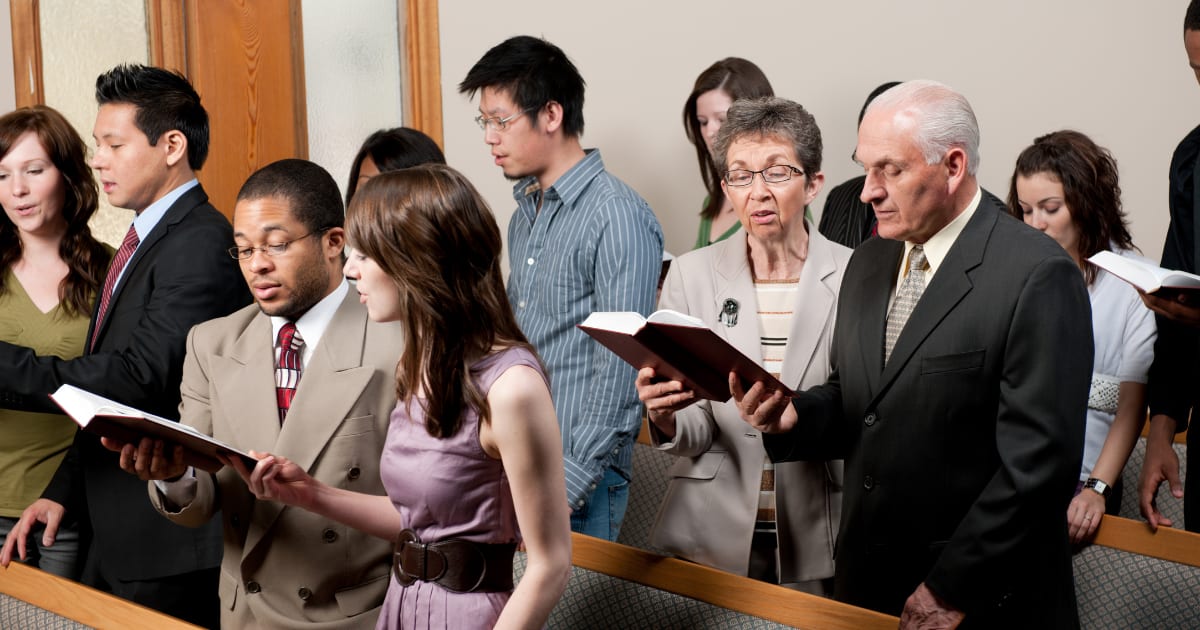
On Sunday evening, Monday morning and afternoon, and Tuesday morning of this week, the annual colloquium took place, hosted by the Director of Music Ministries Division of the National Association of Pastoral Musicians. One hundred and fifty were in attendance.

Every year, this colloquium is held where like minds and hearts meet and discuss matters of great import. This year’s topic was Sing to the Lord: Music in Divine Worship.

The leaders of the colloquium were Msgr. Anthony Sherman, Executive Director of the Secretariat of Divine Worship, and Rev. Dr. Paul Turner, priest of the diocese of Kansas City–St. Joseph and consultant to the International Committee on English in the Liturgy.

Six TableTalks ago, I gave my first reactions to the document. (At the time, I had a bootleg copy given to me by one of my spies after the bishops’ meeting.)

I’m attending this colloquium for the first time after a hiatus of several years. Last year I was snowed out in the mountains of western Pennsylvania.

I love going. It’s fun seeing friends and acquaintances whom you see only at national meetings such as this one.

They are like the cousins you see at funerals of joint-relatives or weddings of younger cousins whom you deny any relationship because they are much too young to be your cousins.

I’m always curious about exploration meetings, colloquia, seminar study groups, and any confab that seeks to explore, discuss, and provide plenty of opportunities to offer one’s opinion on whatever the subject is.

It’s totally new to the history of the Roman church in its development of worship. As you know, our church was never really big on guidance from lay folk or under-clergy on just about everything.

This time, Sing to the Lord: Music in Catholic Worship is based on expertise from a stellar committee as well as import from church musicians whose viewpoints were actively solicited by the Bishops’ Committee on the Liturgy.

It’s a document based on liturgical legislation and norms and—here’s the amazing part—on what has been the practice in celebrating communities.

The document is huge: 188 paragraphs ranging from acoustics to music in the Catholic schools.

It is the progeny of a series of church music documents and legislation that traces its history back to Pope St. Pius X’s “Tra le sollecitudini” (issued motu proprio), whose origins can be traced to a diocesan synod invoked by Bishop Giuseppe Sarto.

Among the matters of the synod were instructions in music and liturgy for seminarians, processions with music bands, organs, Gregorian chant, and the banning of women from church music.

Sound familiar?

Well, Bishop Giuseppe Sarto became Pope St Pius X on August 9, 1903.

Three months and eighteen days after his election he promulgated “Tra le sollecitudini” on November 22, 1903.

St. Cecelia must have been very proud.

Wow. He didn’t mess around. Of course, there were only the Society of St. Gregory in Italy and the Society of St. Cecelia in Germany who championed reforms in chant and sacred music even before his election.

By way of the Lombard Association of St. Gregory in Italy, reforms for church music found a cardinal protector—Giuseppe Cardinal Sarto.

Finally, church music reforms had a friend in high places. There is no record, however, of colloquia formed to study the documents.

There is no indication that any cardinal protector will be present at this week’s DMMD colloquium. Still then, Cardinal DiNardo, the bishop chaplain of NPM, just might show up.

What a happy day that will be.

Next week, I’ll share my report on the colloquium.

You can reach Fred Moleck via email at fmoleck@comcast.net

About GIA | Careers | Contact Us | Submissions
GIA Publications,Inc. | 7404 South Mason Avenue | Chicago, IL 60638
(800) GIA-1358(442-1358) | (708) 496-3800 | Fax: (708) 496-3828
Hours of Operation: 8:30 a.m. - 5 p.m. CST M-F
Copyright © 2008 GIA Publications, Inc.