





-
Search:
Table Talk

by Fred Moleck

Ministry of the Aesthetic


Note well the title, “Ministry of the Aesthetic”—not “Ministry of the Anesthetic.”

It is a term I used to throw around when I taught Music History, History of Sacred Music, Sacred Music Masterpieces, and iconography.

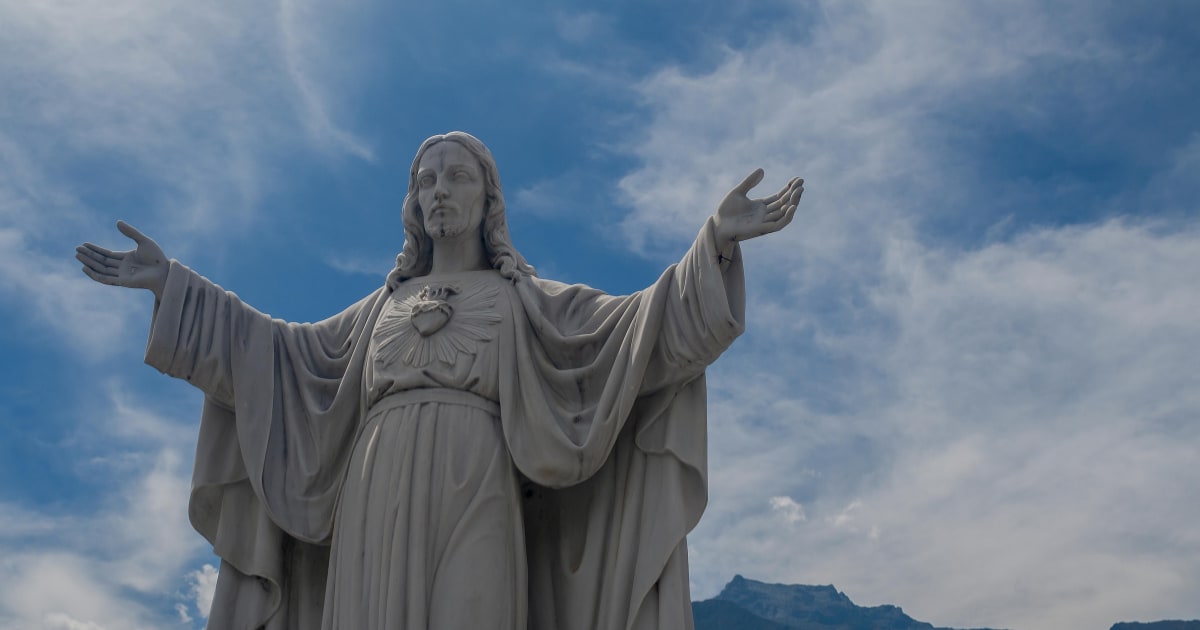
It was a set-up to validate beautiful music, stained glass, pipe organs, sacred images. . . . You get the gist.

I had no text, just personal observations on why there’s nothing wrong with beautiful worship. I even dared to talk about worship aids.

(I’ve disliked the term worship aids because the image that would always crop up in my mind was having some type of health care professional—nurse, doctor in white livery, emergency medical teams handling a gurney and defibrillator—who would circulate in the aisles of church ready to help a person find the right page in the hymnal or simply approach a floundering Catholic and say, “May I help you pray?”

I prefer order of service.

Well, my heart leapt up when I beheld a new GIA publication, Graphic Design and Religion: A Call for Renewal by Daniel Kantor.

Yes, he is the same Daniel Kantor who wrote “Night of Silence and “Ave Maria.” His “Night of Silence” is know almost everywhere, and his “Ave Maria” is quickly becoming a staple in parish repertory.

What many people do not know is that he’s not a professional church musician. He heads up a graphic design business operation—the Kantor Group—in Minneapolis.

He and his associate, Kristy Logan, are responsible for designing some of the most significant religious objects that have appeared in the past ten years, for example, the 2006 hymnal/service book of the Evangelical Lutheran Church in America, Evangelical Lutheran Worship.

You might already have some of their work if you collect the CDs of GIA. A couple examples: David Haas’s God Is Here and Alice Parker’s Sweet Manna. Those are two of the twenty that I have.

What I am heralding here is not their graphic skills, but Dan’s enormously attractive book, which GIA brought out several months ago.

I won’t offer any details on the innovative format of left-page text/right-page illustrations plus the stunning facing pages of powerful images.

What I do offer are some of the bons mots you will find in the book. Here are some that carry artistic and spiritual wisdom.

[Regarding kitschy clip art:] Such abuses do more than trivialize what is being conveyed. They alienate those who are able to experience a full faith life in which the hospitality of beauty is an essential component.

Artists who create sacred art are called upon to illuminate and amplify the sacred in a world that needs help seeing it. It would be hard to imagine work that is more vital to the future of the planet, for a world that is unable to discern the divine essence of creation is sure to exploit it (56).

[Quoting F. Bach, M. Rowell, and A. Temkin in Constantin Brancusi:] “The artist should know how to dig out the being that is within matter and be the tool that brings out its cosmic essence into an actual visible essence” (65).

Hospitality is most true when it goes beyond what is to be expected (194).

I like to read and scan a few pages everyday. It is more than spiritual reading; it provides reasons to continue to do what I do and what you do—creating beautiful sounds, pictures, environments, orders of service—all to aid in the worship of God by God’s people.

It is the ministry of the aesthetic.


You can reach Fred Moleck via email at fmoleck@comcast.net

About GIA | Careers | Contact Us | Submissions
GIA Publications,Inc. | 7404 South Mason Avenue | Chicago, IL 60638
(800) GIA-1358(442-1358) | (708) 496-3800 | Fax: (708) 496-3828
Hours of Operation: 8:30 a.m. - 5 p.m. CST M-F
Copyright © 2008 GIA Publications, Inc.