





by Fred Moleck
400 Years of Paul Gerhardt (1607–1676)
Hymns endure.Last week, I wrote about the hymns of Charles Wesley, who, if he were living today, would be 300 years old.
At last Sunday’s evening prayer, the assembly and I sang “O Radiant Light”—Phos hilaron—whose origins are in the second century!
A couple of weeks ago at morning prayer, the assembly and I sang Mary Louise Bringle’s setting of the Magnificat. She is still alive and lives in South Carolina.
Hymns endure.
Most people, both Catholic and Protestant, who go to church more than one or two times a year would know what a hymn is.
They probably could not define it as a religious poem usually structured in a rhyme scheme and using an organized metrical system.
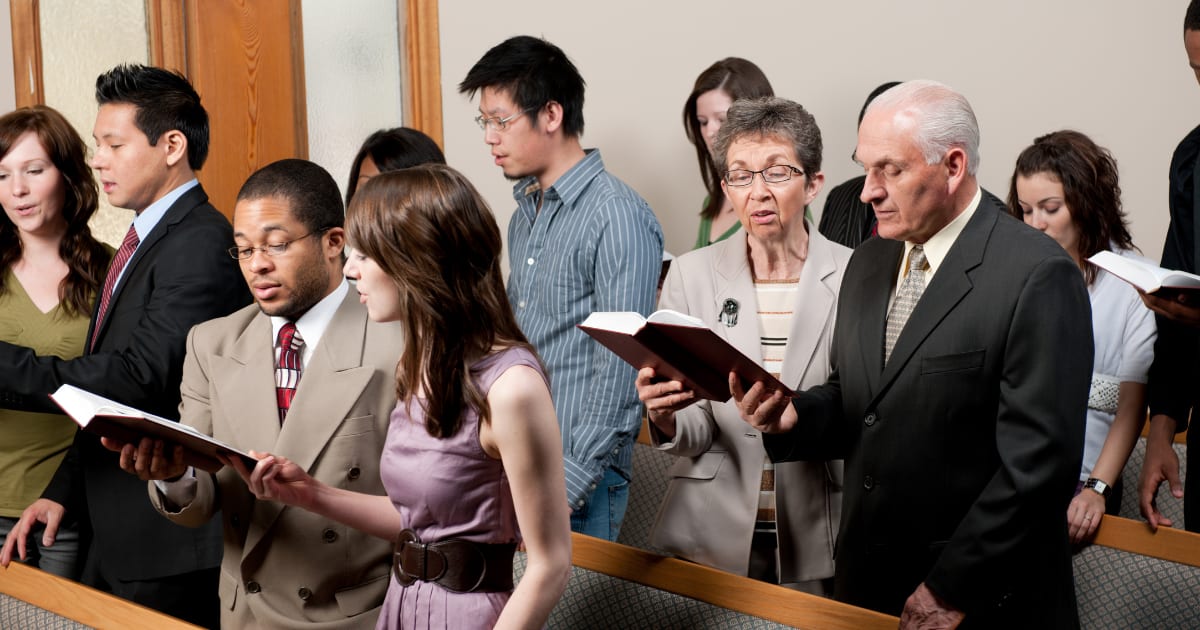
They would know, however, that’s what we sing at different parts of the Mass (service), usually standing with our hymn books held at navel level.
Some might even venture the observation that sometimes the words we sing are what we are about at Mass, especially at Christmas and Easter.
In my mind, that awareness is laudable. What is even more laudable is the successful grafting of hymns to Catholic liturgy as common practice.
Nothing short of miraculous is the common acceptance of the hymn texts and tunes from other Christian denominations other than Roman Catholic.
Last week, the focus on Charles Wesley and his 6,000-plus output demonstrated that Roman Catholics have been singing his words at Christmas time—Hark the Herald Angels Sing—for years and no one has objected.
However, a loyal and brave reader of TableTalk reported that she recently had a nasty encounter with a visiting priest who tried to stop the singing of “A Mighty Fortress Is Our God” at “his” Mass because it was a “Lutheran hymn.”
She and the 600-member assembly sang it anyway.
Today’s focus is on the seventeenth-century Lutheran composer Paul Gerhardt, considered by most hymnody experts as the leading German hymn text writer of the 1600s and, perhaps, for all time.
His life was not easy. He began his ministry during the destructive Thirty Years War (1618–1648). He endured battles over orthodoxy within the Lutheran Church and the Reformed Church.
At one point, the governance of the church tried to terminate his work at the church in Berlin. There was a public outcry. He was reinstated.
His conscience, however, prohibited his staying. He moved on.
In his writing there appears no despair or anger. His life gave powerful witness to his flock and to the whole church that God’s love lasts forever.
A good example is his hymn “If God My Lord Be for Me,” based on Romans 8:31–35
If God my Lord be for me, I may a host defy;
For when I pray, before me my foes, confounded, fly.
If Christ, my head and master, befriend me from above,
What foe or what disaster can drive me from his love?His hymn texts are probably unknown to most of us Roman Catholics save one—“O Sacred Head, Now Wounded.”
We know it by the Henry Baker translation, “O Sacred Head Surrounded.”
There are four stanzas in the 2006 Evangelical Lutheran Worship service book/hymnal of the Evangelical Lutheran Church in America published by Augsburg Fortress.
The last stanza deserves to be printed here:
Lord, be my consolation; shield me when I must die;
Remind me of thy passion when my last hour draws nigh.
These eyes, new faith receiving, from thee shall never move;
For all who die believing die safely in thy love.These words were written by a man who lived during a time of warfare and bloodshed, who saw the deaths of four of his children and the untimely death of his wife, whose conscience created conflict over what he believed with what he was required to believe, whose strong love of God and God’s word provides inspiration and hope for four centuries.
Hymns—good hymns—endure.
You can reach Fred Moleck via email at fmoleck@comcast.net