





by Fred Moleck
A Cool and Hot Advent
Marshall McLuhan was considered by many in the 1960s,’70s, ’80s, and even today as a guru of media culture.
His book, The Medium Is the Massage (1967), redirected thinking about communication, the electronic explosion in the media, advertising, and the human condition.
(Human condition is a catch-all term for “what does it have to do with me?”)
He was dissed by academia, but was acclaimed by popular commentators who saw an incredibly fresh approach on how humans communicate with each other,
The kernel to The Medium Is the Massage is that what we say diminishes to how we say it. We’ve known that already.
Look how the Gospel is perceived by those who receive it by way of an authoritarian-heavy, structure-laden agency compared to an agency that champions the pastoral-humane understanding of what Jesus said and did.
For example: God is love. The first structure says that God is love and here are five hundred ways of loving God and how God may love us. In the next breath the same structure offers five thousand ways of not loving and what God will do to us if we don’t shape up.
The second structure says God is love and loves us when we seek to be fully human and passionately in love with God and God’s creation and creatures.
Same Gospel—radically different message.
McLuhan articulated this observation when he was commenting on “technological determinism” and coined the phrase: “We shape our tools and they in turn shape us.”
In this column, I want to explore another facet of his thinking and writing on the media.
He divides media into two categories: Hot and Cool.
Hot media has little emphasis on audience participation. Cool media demands high participation due to its structure and intent—the receiver must supply the missing information.
Two musical examples: Hot media—watching a TV program of the university madrigal singers in renaissance costume singing madrigals. Cool media—sitting around a table with five or six other singers and singing madrigals.
(Costumes are not really necessary, but it might be fun to pretend a little.)
Advent provides both experiences as well as another consideration.
This hot and cool media theory hit me really strong last Sunday while I was singing in the schola at the 5:00 vespers in the Roman cathedral in Pittsburgh.
The music was very simple chant psalm tones, chant-style hymns, and responses. No recorder consort, no polyphonic alternatim verses. Only pure a cappella singing.
The format was bare bones, but it provided a ready vehicle for us to supply our flesh and blood to create a singing, praying body. We were the makers of the “message.” We became the message. We were in the “cool medium.”
We were the proclaimers of the good news.
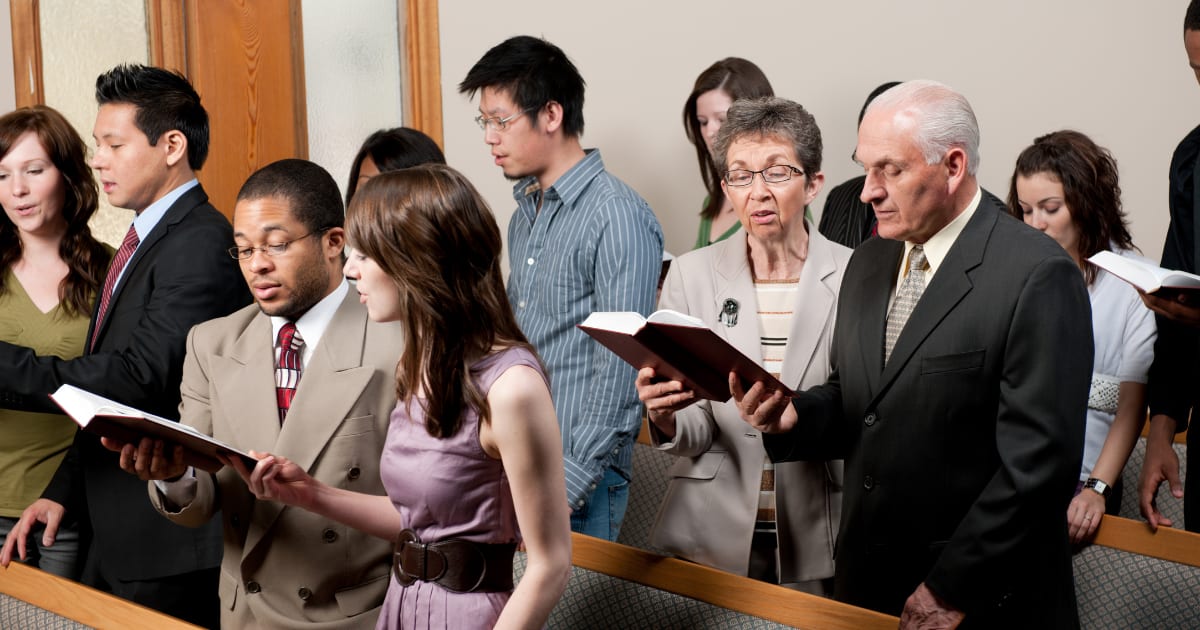
Most of the folks in the assembly tried to sing along with the verses marked “All” and did a pretty good job.
There were the others who sat quietly and watched . . . and prayed. They were in the “hot medium.”
I had no way of knowing if they were engaged in the prayer experience. I had no special detecting device whether they were in full meditation. God only knows that.
There is no reason—other than my cultivated cynicism—that they were not psychically and spiritually connected to us and to the rest of the singing assembly.
We can categorize all of our worship experiences into “hot” or “cool.” That helps when we try to formulate some tools for critiquing what we do and how we do it—“it” being making liturgy happen.
The dual approach to the media can also provide valuable language in articulating what we want to happen when we celebrate liturgy.
But the “hots” and “cools” offer precious little data on the depth of the prayer generated by Advent vespers or any worship experience. Only God can make that judgment—and that’s how it should be.You can reach Fred Moleck via email at fmoleck@earthlink.net