






Table Talk

by Fred Moleck

Great Awakenings: The Music (Part 2)

The repertories are immense.

First Great Awakening. Eighteenth-century metrical psalmody was loosing its dominance to the hymns of Isaac Watts and Charles Wesley. The strongest impact of change came from New England Protestant clergy with their campaign to improve congregational singing.

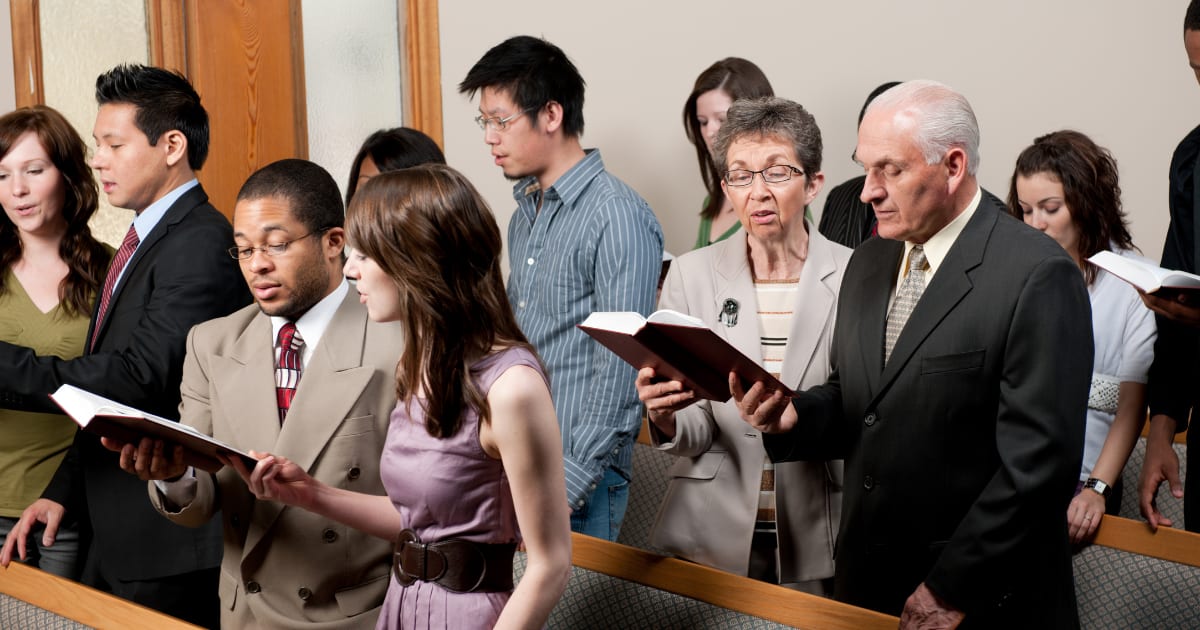
Congregational song was described as “miserably tortured, and twisted, and quavered . . . into an horrid Medly of confused and disorderly Noises . . . something so hideous . . . as is beyond Expression bad” (Rev. Thomas Walter, quoted in Nicholas Temperly, The Hymn Tune Index [London: Oxford University Press, 1998]).

They sang by rote. The campaign generated a “singing school” phenomenon by which itinerant singing masters would travel from town and village equipped with oblong-shaped books with the principles of music plus a library of fuguing tunes and anthems and hymns contained within the book’s covers.

This educational effort moved well into the nineteenth-century churches with a large representation of regional tunebooks being printed.

From this experience, the shaped-note, or fa-so-la, singing developed in the nineteenth century, the time of the Second Great Awakening. Fa-so-la singing is alive and vibrant even today.

Second Great Awakening. A hymn explosion occurred when the singing-school masters developed a music educational device to teach sight singing. The notation was shaped to aid the singing of syllables—triangle for fa; circle for sol; square for la.

The books and schools were everywhere. Quickly absorbed into rural and small-town USA, a genuine school of American folk music was generated. Some of its items still are with us--BEACH SPRING, FOUNDATION, HOLY MANNA, and WONDROUS LOVE to name a few.

Third Great Awakening. In the more gentile churches one would hear choirs with some instruments. Larger churches boasted the quartet choir who sang music with four-bar phrases to accommodate four sets of lungs.

Revival hymns expressed the simplified road to conversion with hymns in the style of verse and refrain—e.g., “Blessed Assurance, Jesus Is Mine,” “Just as I Am without One Plea.”

The black spiritual takes on social acceptance. Much of this repertory feeds into the twentieth century and remains as major components of religious music.

Fourth Great Awakening. We’re living in it. During the early part of the twentieth century there was a great concern over folk music, ballads, and the craft of music. From this ethnomusicological research comes the English Hymnal, initiated by Ralph Vaughan Williams.

Gospel music, both white and black, has been integrated successfully into liturgical churches. Praise choruses represent one of the largest styles of worship music in the history of Protestant music.

In other words, American Christians sing a diverse repertory, both in musical style and theological import.

Each Great Awakening served to express whatever was in the minds and hearts of those living within a particular “awakened consciousness.”

Today, there is such a wide spread of cultures and styles and tastes and spiritualities and understanding of “church,” I’m hard pressed to typify and analyze them.

There is one crucible where much of this diversified repertory takes place. What I have in mind is the inclusive sacred music program in some of the more “hip” liturgical churches.

It has becoming less and less unusual to attend a Roman Catholic Mass and sing an eighteenth-century tune and text as a processional.

A few minutes later, the assembly sings a newly composed psalm setting and refrain with an Alleluia from another geographical setting—like Africa.

The choir sings an African-American version of “I Heard the Voice of Jesus Say” as an anthem.

A set of eucharistic acclamations is sung in Spanish, starting with “Santo, Santo, Santo.”
The Communion processional is from the community of Taizé, “Ubi caritas” (the third language already used in public celebration).

We all leave in procession singing Crouch’s “Soon, and Very Soon.”

We are all so “greatly awakened.”

My wonder is when the Fifth Great Awakening will take place. Perhaps that can be answered by some of your children and grandchildren.

As for myself, I plan not to fall asleep. I will remain “awakened.”

You can reach Fred Moleck via email at fmoleck@earthlink.net

About GIA | Careers | Contact Us | Submissions
GIA Publications,Inc. | 7404 South Mason Avenue | Chicago, IL 60638
(800) GIA-1358(442-1358) | (708) 496-3800 | Fax: (708) 496-3828
Hours of Operation: 8:30 a.m. - 5 p.m. CST M-F
Copyright © 2010 GIA Publications, Inc.