






Table Talk

by Fred Moleck

Requiem aeternum dona eis Domine

During my first ten years as a Catholic organist and singer at daily mass and a wedding or two, I earned an extra $10.00 by singing the funerals at my parish.

The Requiem mass was the chant Mass, and having heard so many of my peer-group organists pulverize both text and music, I had little appreciation of the high artistic quality of the chant Requiem.

I attended a Benedictine college, however, and witnessed my first funeral with the community and archabbot celebrating the death of one of their brothers. The music, of course, was chant.

It was overwhelming and not at all near what I would be singing in the parish or Mary Elaine would be singing at the other parish morning Mass, which could be the Requiem Mass.

That was not unusual. The priest had to fulfill the requirement of a High mass for Mass offerings, so his daily Mass could easily be the Requiem for some dead person.

Needless to say, the monks singing the Mass provided firsthand evidence that he chant Requiem stands as a highpoint in the history of western chant as well as western music.

I was transformed.

It was long after that funeral that I discovered Mozart's Requiem then the Verdi Requiem. And to think, it was composed by Catholics – well, at least people in western Catholic culture – for Catholics.

I never heard them, however, at liturgy. It was always a concert.

Last Friday I had the opportunity to hear the Requiem Mass composed by Tomás Luis de Victoria during an actual liturgy, a memorial for the parishioners of the church where the work was performed.

The interesting twist is that the church is Calvary Episcopal Church in Pittsburgh. The rector and the organist and choir director had the wisdom of not trying to stage a Tridentine liturgy.

The program notes stated, "Victoria's music provides the principal musical vehicle for the liturgy, but it is a part of the overall experience, not its totality. We have conceived this presentation not as a 're-enactment,' a stage piece, but as a modern liturgical observance."

I want to tell you that hearing the music sung so well by one of Pittsburgh's best choirs, the ceremonies done with high-church precision was a spiritual lift that I still am enjoying.

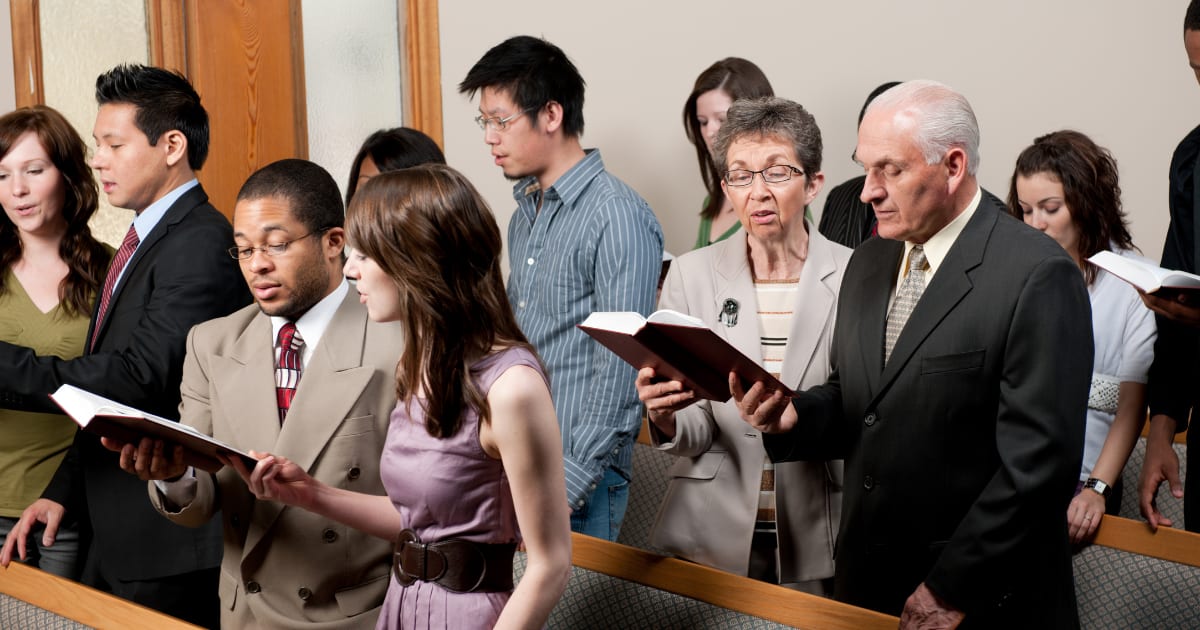
I was convinced even more that music of our church works best during worship – not necessarily liturgical worship, but in the church with an assembly of believers whose intention is to worship God by singing some and listening a lot.

I defy anyone to say that even though we were not singing every note that evening that we were not fully engaged in worship.

All Saints and All Souls has come and gone. How many of our parishes heard the chant "In paradisum" during one of the many Masses celebrated on those two days?

How many of the gathered folks at those Masses sang the chant Litany of the Saints as a processional song?

During Sundays of Advent, many parishes sing evening prayer in some fashion or another. Why couldn't the reading for each of those evenings be an item from the Advent section of Handel's Messiah?

The proclamation of the scripture is essential to the Liturgy of the Hours, and there is no reason that Handel cannot be the lector – by way of his music, of course.

The restrictions on incorporating some of the world’s great works are only as tight as the level of ingenuity of the musical leadership of the church.

And to think, I had to go to the high-rank Episcopal Church to experience liturgical prayer made possible by music from the Catholic tradition.

I’m not complaining, mind you. I'm just happy that the Holy Spirit doesn't restrict its actions along guidelines put out by the bureaucrats of any church.

Who knows, maybe next All Saints/All Souls Days, there will a Catholic Church somewhere whose choir will sing Fauré's "In paradisum" as part of the Communion rite.

It would be more than just "nice." It would be another interpretation of what the Requiem is all about: peace, eternal rest, and the welcoming home of one of the brothers and sisters.

". . . Et lux perpetua luceat eis."


You can reach Fred Moleck via email at fmoleck@earthlink.net

About GIA | Careers | Contact Us | Submissions
GIA Publications,Inc. | 7404 South Mason Avenue | Chicago, IL 60638
(800) GIA-1358(442-1358) | (708) 496-3800 | Fax: (708) 496-3828
Hours of Operation: 8:30 a.m. - 5 p.m. CST M-F
Copyright © 2010 GIA Publications, Inc.